statenislandapplianceservice.com

Refrigerator Repair Staten Island, NY
A warm refrigerator turns into a food-safety and scheduling problem quickly. A freezer that is softening, water under the appliance, heavy frost, repeated clicking or an ice maker that has stopped working can point to very different failures. The first step is to protect the food, note the actual temperature and arrange a diagnosis without guessing at a part.
For refrigerator repair Staten Island homeowners can request service from any borough ZIP code. Tell us the appliance type, brand, model number and what changed. Appointment availability, the diagnostic-fee policy and the repair scope are confirmed before the visit.
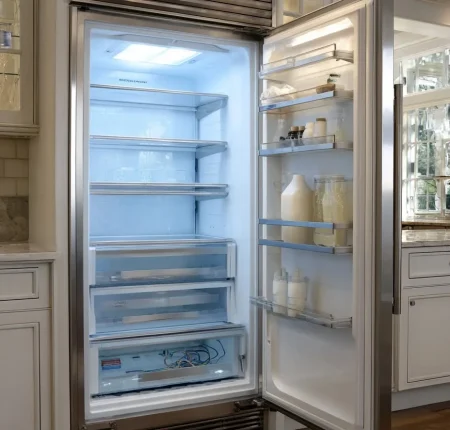
Built-in refrigerator open to show the illuminated interior and shelves.

Residential refrigerator cooling & freezer diagnostic service across Staten Island

What should you do right now?

  • Keep refrigerator and freezer doors closed to preserve temperature.
  • Use an appliance thermometer; a display setting is not always actual temperature.
  • Record when cooling changed and any recent power surge or breaker trip.
  • Move perishables to safe cold storage per USDA food safety guidance.
  • If water reaches wiring or outlets, avoid contact and shut off power safely.
  • Stop use if you smell burning, see smoke/sparks, or breaker repeatedly trips.
  • Do not puncture frost, pry panels, or attempt to inject refrigerant.

Refrigerator Repair Staten Island for Common Cooling Problems

“Not cooling” describes a result, not a single component failure. A systematic diagnosis connects temperature readings, sounds, frost patterns, and electrical component tests.

Fridge Warm, Freezer Cold

Airflow is restricted between compartments. Involves evaporator fan, auto-damper, defrost heater, or blocked return vents.

Next step: Avoid chipping ice. Note if fan sound changes when door switch is pressed.

Both Compartments Warm

Neither section cools despite lights working. Tests compressor start relays, condenser fans, electronic controls, or power surge damage.

Next step: Confirm home power is stable and unit is not stuck in showroom/demo mode.

Continuous Compressor Run

Runs constantly during hot weather or with heavy frost. Caused by dirty condenser coils, failing door gaskets, or defrost sensor faults.

Next step: Do not assume run time automatically equals a failed compressor.

Food Freezing in Fresh Food

Milk or produce freezes on shelves. Caused by stuck motorized dampers, shorted thermistors, or items placed right in front of cold vents.

Next step: Relocate items away from air vents and monitor shelf temperature.

Uneven Shelf Temperatures

Top shelves warm while bottom drawers stay cool. Points to weak circulation blowers, frozen evaporator coils, or duct blockages.

Next step: Physical airflow diagnosis required before replacing sensors.

Compressor Clicking Off

Compressor attempts to start every 2-3 minutes with a distinct click. Indicates failing start capacitors, PTC relays, or locked rotors.

Next step: Turn unit off to prevent winding overheating before technician tests.

Refrigerator Leaks, Frost, Ice and Moisture

Water can originate from defrost drain lines, pressurized ice-maker tubing, or condensation. Trace where water first appears before service.

Water Under or Inside

Water under crispers indicates frozen defrost drain troughs. Water behind or beneath unit involves tubing, filter heads, or cracked inlet valves.

Heavy Frost & Ice Buildup

Thick frost across the back wall stems from failed defrost bimetals, heaters, or timers. Never use sharp tools or heat guns, which puncture liners.

Door & Cabinet Condensation

Sweating gaskets and moisture droplets occur when warm room air enters through warped magnetic door seals or unaligned hinge pivots.

Shut off water supply if active leaks appear

Turn off the dedicated 1/4-inch shutoff valve behind the refrigerator if water is continuously spraying or pooling. Photograph the leak origin safely before mopping.
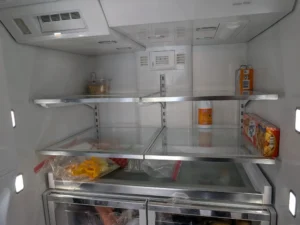
Refrigerator interior and shelves inspected during cooling service.

Refrigerator Repair Staten Island: Freezer and Ice-Maker Service

Residential upright freezers, chest freezers, and integrated ice makers tested for temperature, harvest timing, and water delivery.

Freezer Not Freezing

Soft ice cream, thawing meat, or frost coating packages. Tests evaporator fans, defrost thermostats, and compressor output. Keep doors sealed to preserve temperature buffer.

Ice Maker Stopped Producing

Ice maker requires sub-10°F freezer temps, water pressure, and motor harvest cycling. We inspect fill tubes, solenoid valves, optics, and harvest modules.

Small, Hollow or Jammed Cubes

Misshapen cubes signal low water inlet volume, clogged filter cartridges, or mineral restricted lines. Replacing modules without checking water flow leaves faults unresolved.

Noises, Odors and Electrical Warning Signs

Refrigerators make normal humming and clicking sounds. New, loud, or persistent sounds combined with warming indicate component distress.

Rattle or Vibration

Unit vibrating against floor or wall. Stabilize leveling legs and check condenser fan shroud clearance.

Buzzing at Ice Maker

Water inlet solenoid attempting to fill when water line is dry, crimped, or shut off.

Repeated Clicking

Compressor start relay attempting to engage every 2-3 minutes. Signals failed capacitor or locked rotor.

Scraping Fan Contact

Evaporator fan blades striking heavy frost buildup. Stop use to avoid burning out fan motor.

Burning / Electrical Odor

Immediate hazard: disconnect power if safe. May involve burnt harness terminals, control board shorts, or relay arc.

Chemical / Refrigerant Smell

Ventilate kitchen and avoid open flames. Sealed refrigerant circuits require EPA 608 certified recovery.

Refrigerator Types and Brands Covered by Service Request

Model numbers matter more than brand names alone; engineering and parts differ significantly within each brand family.

Supported Refrigerator Types

French-door, side-by-side, bottom-freezer, top-freezer, counter-depth units, residential built-in columns, standalone upright freezers, and chest freezers.

Brands & Manufacturer Warranty

Servicing GE, Whirlpool, Frigidaire, LG, Samsung, Maytag, KitchenAid, Kenmore, Bosch. Full model number confirms parts channels. Check active factory warranties before authorizing outside service.

How Refrigerator Repair Staten Island Diagnosis Works

Professional appliance repair begins with an accurate physical diagnostic, not guesswork.
1

Describe the symptom

Report measured temperatures, visible frost or water, noises, error codes, and outage history.

2

Confirm appointment terms

Confirm appointment availability, provider name, diagnostic fee policy, and cancellation terms before the visit.

3

Provide safe access

Clear food items around vents. Note tight alcoves, built-in panels, stairs, or hard-to-reach shutoffs.

4

On-site diagnostic testing

Physical testing of fans, defrost circuits, thermistors, relays, and compressor windings. Receive written quote before work.

5

Approved repair & testing

Components installed, operation verified, and written warranty provided. Technician advises on temperature recovery timing.

Sealed-System and Refrigerant Work
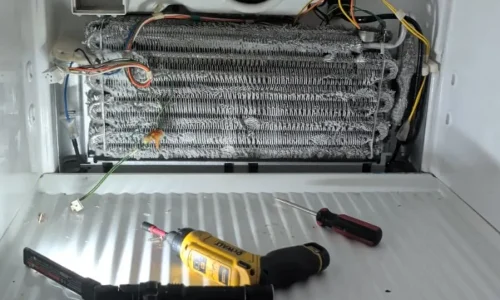
The sealed refrigeration system includes the compressor, condenser, evaporator, filter drier, and copper refrigerant tubing. A warm refrigerator does not automatically mean a leak or bad compressor; fan or defrost failures mimic these symptoms.
Technicians who attach diagnostic pressure gauges, recover refrigerant, or braze sealed lines must hold valid EPA Section 608 certification. Never accept ‘it just needs Freon’ without evidence of a certified leak check and a compliant repair plan.
Refrigerator evaporator fan and coil exposed for cooling repair.

Refrigerator Repair Cost Factors

Cost depends on failure type, component access, testing time, parts availability, and labor. Ask before booking: What does the diagnostic fee cover? Is any part credited to approved repairs? Is the quote itemized with written warranty backing?

Should You Repair or Replace?

Age alone does not decide. Consider cabinet condition, recurrence of failure, and part availability. Minor fan or defrost repairs on an otherwise sound unit make sense; extensive compressor work on a corroded cabinet favors replacement.

Staten Island Service Areas & Local Conditions

Serving all Richmond County ZIP codes: 10301–10310, 10312, and 10314. FoodSafety.gov confirms unopened refrigerators hold safe temps for ~4 hours during outages (48h full freezer / 24h half freezer).

North Shore

St. George, Tompkinsville, Stapleton, Clifton, Rosebank, West Brighton, Port Richmond, Mariners Harbor.

Mid-Island

New Springville, Bulls Head, Willowbrook, Todt Hill, Emerson Hill, Dongan Hills, and surrounding areas.

East Shore

Arrochar, Grasmere, South Beach, Midland Beach, New Dorp, Oakwood, and coastal residential pockets.

South Shore

Great Kills, Bay Terrace, Eltingville, Annadale, Huguenot, Prince’s Bay, Pleasant Plains, Tottenville.

Refrigerator Repair Staten Island FAQs

Direct answers to common questions about temperatures, defrost faults, diagnostic fees, and food safety.
It is time-sensitive because perishable food spoils, but safety depends on measured temperature and signs of damage. Keep doors closed and use an appliance thermometer. Smoke, sparks, burning odor, or water near outlets require immediate emergency power shutoff.
FoodSafety.gov recommends maintaining a refrigerator at 40°F (4°C) or below and a freezer at 0°F (-18°C) or below. Use an appliance thermometer; display panel targets do not guarantee actual food compartment temperature.
The fresh-food compartment is not receiving cold airflow from the freezer evaporator. Causes include frosted return vents, failed evaporator fan motors, stuck motorized dampers, or defrost heater faults. Inspection is required.
A power reset may clear transient electronic states, but repeated resets erase diagnostic error codes and do not resolve physical component faults. Never restart units showing smoke, sparking, burning odor, or repeated breaker trips.
A blocked or frozen defrost drain line is the most common cause. Condensation during defrost overflows into the cabinet instead of draining into the rear drain pan.
Yes, when integrated into the appliance. Diagnostic tests evaluate the dual water valve, internal lines, filter head, optic sensors, and harvest module.
Yes. Requests cover upright residential freezers, chest freezers, and integrated refrigerator freezer compartments. Commercial walk-in refrigeration requires industrial capability.
We service major brands out-of-warranty. Providing your full model number allows verified checking of parts access and technical documentation prior to dispatch.
Availability depends on technician dispatch schedules, part inventory, and request time. Call between 8:00 a.m. and 5:00 p.m. daily to confirm open slots.
Many common repairs (fans, relays, thermostats, valves) can be completed if parts are in stock. Obsolete boards, custom panels, or sealed-system work may require a second visit.
Yes. The diagnostic fee covers the technician visit and complete component testing to produce a written repair estimate. Ask if any portion credits toward approved repairs.
If testing reveals a sealed-circuit failure, technicians must possess EPA Section 608 certification to recover refrigerant and perform brazing. We verify qualified fulfillment.
Provide the brand, full model number from the interior label, compartment temperature readings, symptom details, error codes, and photos of visible frost or leaks.

Prepare for Refrigerator Repair Staten Island Service

Have these details ready before calling or booking online to expedite diagnosis and part preparation:
  • Brand and complete model number from interior door/wall label.
  • Configuration (French-door, side-by-side, top/bottom freezer, built-in).
  • Fresh-food and freezer temperature readings if available.
  • Exact symptom, error codes, and when cooling changed.
  • Photos of frost patterns, water leaks, or error displays.
  • Staten Island street address, ZIP code, and parking/stair access details.

Call 718-559-5741 daily from 8:00 a.m. to 5:00 p.m., or submit an online request.
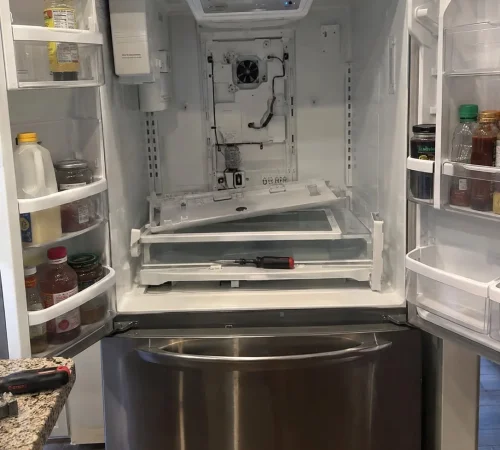
French-door refrigerator interior disassembled for cooling-system repair.

Related Appliance Help & Knowledge Guides

Educational resources to help protect food, diagnose symptoms, and make sound repair decisions.

Refrigerator not cooling: safe checks

Learn what causes airflow failures, frozen evaporator coils, and sensor errors.

Where a refrigerator leak may begin

Trace defrost drain lines, water inlet valves, and dispenser tubing.

Food safety after a power outage

Follow USDA and FDA temperature standards during electrical storms.

Repair or replace an older appliance?

Compare complete repair quotes against replacement installation costs.

Diagnostic fees & written estimates

Understand on-site testing policies, labor rates, and fee crediting terms.

Explore all appliance repair services

Full navigation for washing machines, dryers, dishwashers, ovens, and stoves.
Scroll to Top