
Dishwasher Leaking? Stop the Cycle and Find the Source Before Running It Again
A dishwasher leaking water onto the kitchen floor can damage hardwood, laminate, tile grout, the subfloor, adjacent cabinetry and the ceiling below if the kitchen is on an upper level. Unlike a refrigerator or washer leak, a dishwasher leak often goes unnoticed for days or weeks because the dishwasher is enclosed in a cabinet with only the front visible. Water can accumulate underneath, soak into the subfloor, reach electrical connections and create hidden mold before anyone sees it on the kitchen floor.
Before running the dishwasher again, identify where the water is coming from and when it appears. A door-gasket leak during the wash cycle is a different problem from a supply-line drip that runs constantly, and both are different from an oversudsing condition or a cracked tub. The timing, location and volume of water narrow the diagnostic path before anyone opens the dishwasher cabinet.
For help arranging dishwasher leak diagnosis in Staten Island, tell us the brand, model number, where the water appears and at what point in the cycle. Appointment availability, the business handling the visit, diagnostic terms and repair scope should be confirmed before the appointment.
Request Dishwasher Service
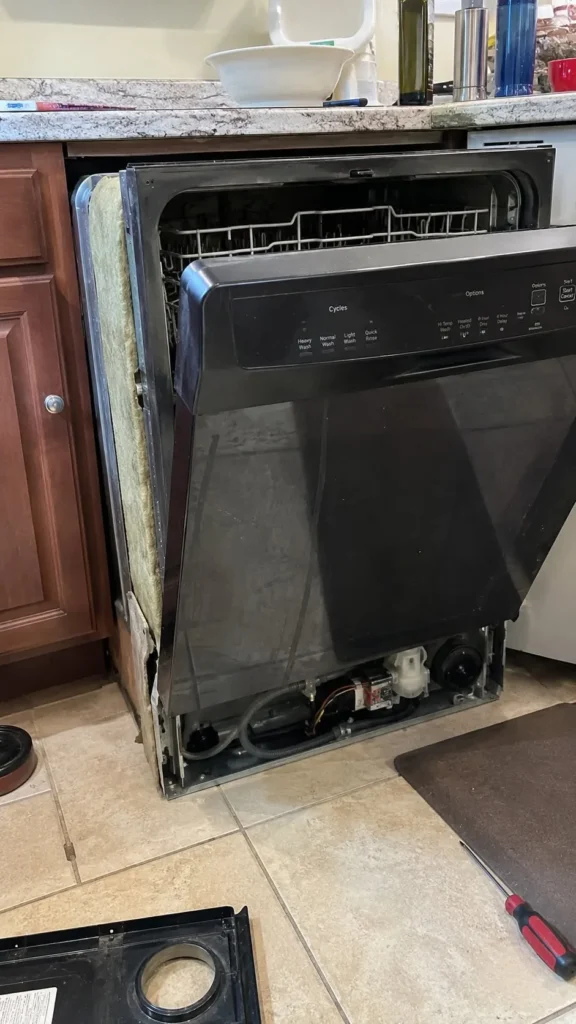
Stop and Protect: What to Do Before Investigating
A dishwasher uses hot water, runs on a dedicated electrical circuit and is plumbed into the household water supply. Act in this order before investigating.
- Check for electrical danger. If water has pooled under the dishwasher near the electrical junction box, the power cord or the outlet, turn off the circuit at the breaker panel before touching the dishwasher or standing in the water.
- Stop the cycle. Press cancel. If the dishwasher does not respond, turn off the breaker.
- Turn off the water supply. The dishwasher supply valve is usually under the kitchen sink. Close it to stop any active supply-line drip. If the valve is corroded, hard to reach or does not close fully, do not force it.
- Contain the water. Place towels around the base and check whether water has reached adjacent cabinetry, flooring seams or a lower level.
- Photograph the water. Record where it appears, how much, the area around the dishwasher front, the under-sink connections and the floor condition before you clean up.
- Do not run the dishwasher again until the source is identified. Running another cycle adds more water and can worsen floor and cabinet damage.
Dishwasher Leaking: Where Is the Water Coming From?
The location and timing of the water narrow the source. These observations help define the diagnostic path, but none confirms a failed component by itself.
| Where and when the water appears | Safe clues to record | Possible sources to evaluate |
|---|---|---|
| Front of the dishwasher during wash or rinse | Door gasket condition, spray arm alignment, loading pattern | Door gasket, spray arm deflection, overloading, tub crack |
| Front of the dishwasher during fill only | Detergent type and amount, suds visible, water level | Oversudsing, wrong detergent, overfill, float-switch fault |
| Under the dishwasher, constant drip even when off | Under-sink supply valve, supply-line connection, junction box | Supply line, inlet valve, supply fitting, water connection |
| Under the dishwasher during drain cycle | Drain hose connection, pump area, hose routing | Drain hose clamp, pump seal, cracked hose, loose connection |
| Leaking at the under-sink connection | Drain hose at disposal or tailpiece, air gap | Hose clamp, air-gap overflow, disposal connection, tailpiece |
| Water stain on adjacent cabinet or subfloor | Pattern, duration, visible damage, musty smell | Slow chronic leak from supply, inlet valve, tub crack or seal |
| Visible drip from dishwasher door during cycle | Door seal condition, latch alignment, spray pattern | Torn gasket, displaced gasket, warped door, spray-arm deflection |
The most common cause: door gasket and loading
The door gasket—the rubber seal around the dishwasher door opening—is the most frequent source of visible dishwasher leaks. The gasket prevents water from escaping during the wash and rinse cycles. Over time, the gasket can tear, compress, lose flexibility, accumulate food debris and grease, or become displaced.
Loading also matters. A tall item, a pan handle, a cutting board or a utensil that blocks the spray arm can deflect water directly at the door gasket or through a gap. Before assuming the gasket has failed, check whether the loading pattern has changed or an item is interfering with the spray arm rotation.
Signs of a door-gasket problem:
- Water drips from the front edge of the door during the wash cycle.
- The gasket is visibly torn, cracked, compressed flat, displaced or missing a section.
- Food debris, grease or mold has built up on the gasket or the tub lip.
- The door does not close firmly or the latch does not engage fully.
Clean the gasket and the tub lip with warm water and a soft cloth. Check the door alignment and latch engagement. If the gasket is damaged, it needs replacement with the correct model-specific part.
Supply-line leaks: constant drips that cause hidden damage
The dishwasher connects to the household water supply through a supply line, usually a braided stainless-steel hose or a copper tube, running from the shutoff valve under the kitchen sink to the inlet valve on the dishwasher. A leak at either connection, at the valve body or from a cracked supply line can drip constantly, even when the dishwasher is off.
Because the supply line runs under the countertop and behind the kickplate, this type of leak often goes undetected. Water slowly saturates the subfloor, warps the cabinet floor, corrodes the dishwasher frame and can reach the electrical junction box underneath. By the time water is visible on the kitchen floor, the damage may be significant.
Check the supply valve under the sink for moisture, corrosion or mineral buildup. Feel the supply line where it connects to the valve and where it enters the dishwasher. A damp fitting or visible drip is a supply-side problem.
Oversudsing: not a leak but water on the floor
Using the wrong detergent—regular dish soap instead of dishwasher detergent—creates massive suds that overflow through the door gasket, the vent, the air gap or the drain. The result looks like a major leak but is actually a detergent error.
Signs of oversudsing:
- Suds are visible on the kitchen floor, under the door, at the air gap or in the tub.
- The problem happens only after adding new detergent or switching brands.
- A plain-water cycle without detergent produces no leak.
Use only dishwasher-specific detergent: pods, tablets, powder or gel labeled for automatic dishwashers. Regular dish soap, even a small amount, creates persistent suds. If an oversudsing event has occurred, run two or three empty rinse cycles to clear the residue.
Drain-connection and pump leaks
During the drain portion of the cycle, water exits through the drain pump and drain hose. A loose hose clamp, cracked drain hose, failed pump seal or deteriorated pump housing can drip during and just after the drain cycle. These leaks appear under the dishwasher and may not be visible without removing the kickplate.
Hidden Leaks: The Silent Damage Problem
Many dishwasher leaks are not dramatic events. They are slow, persistent drips that accumulate over weeks or months under the dishwasher and inside the adjacent cabinet cavity.
Signs of a hidden dishwasher leak
- A musty or mold smell near the dishwasher or under the sink.
- Warped, soft or discolored flooring in front of or adjacent to the dishwasher.
- Swollen, delaminating or stained cabinet panels next to the dishwasher.
- Visible mold on the underside of the countertop, the subfloor or the cabinet frame.
- A water stain on the ceiling below (if the kitchen is above another room).
- Corrosion on the dishwasher frame, mounting brackets or junction box.
If you suspect a hidden leak, turn off the water supply to the dishwasher and remove the kickplate to inspect the underside. Use a flashlight to check for moisture, staining and active dripping. Photograph the findings and report them to the property owner or insurer if damage is significant.
What Usually Requires Professional Diagnosis?
If the gasket is intact, the loading is correct, the supply line is dry, oversudsing has been ruled out and the dishwasher still leaks, the following systems typically require on-site diagnosis.
Inlet valve
The inlet valve opens to fill the dishwasher at the start of the cycle. A cracked valve body, failed internal seal or stuck-open valve can drip or flood. The valve is electrically controlled and water-connected. Do not attempt replacement while the water supply is on and the power is live.
Tub and tub seal
The dishwasher tub can develop cracks, pinholes or seal failures, especially on models with a plastic tub that has aged. A tub leak may only appear when the tub is full, making it intermittent and hard to see without removing the dishwasher from the cabinet.
Pump seal and pump housing
The wash pump and drain pump have seals that prevent water from escaping. Worn seals, cracked housings or bearing failures can produce drips during operation. Pump leaks are located underneath the dishwasher and require access from below or by pulling the unit out.
Spray arm and wash system
A cracked spray arm, loose spray arm nut, split spray arm seal or detached water distribution component can redirect water against the door gasket, the vent opening or the tub wall at an angle that causes leaking. Spin the spray arms by hand to check for looseness or damage.
Float switch and overfill protection
If the float switch is stuck in the down position or the overfill protection fails, the dishwasher can fill beyond its safe level and leak from the door gasket or vent. Check whether the float—a small dome-shaped piece on the tub floor—moves freely up and down.
Staten Island Conditions That Affect Dishwasher Leaks
Kitchen remodels and new flooring
When kitchen flooring is replaced, the dishwasher may need to be removed and reinstalled. Incorrect reinstallation—a misaligned door, a pinched supply line, a kinked drain hose or an unlevel position—can create a new leak. If the dishwasher started leaking after a remodel or floor replacement, the installation should be checked.
Older cabinetry and subfloor vulnerability
Many Staten Island homes have wood-frame cabinetry and plywood or particle-board subfloors. These materials are especially vulnerable to water damage. A slow dishwasher leak can destroy a cabinet base, subfloor section or adjacent flooring in ways that are expensive to repair and invisible until the dishwasher is pulled out.
Multi-unit buildings and downstairs damage
A dishwasher leaking in an upper-floor kitchen can damage the ceiling, walls and belongings in the unit below. This is a building-management and insurance matter in addition to an appliance repair. Document the leak, notify all affected parties and contact the insurer promptly.
Landlord, tenant and building coordination
If the landlord installed the dishwasher, notify the landlord or property manager in writing about the leak and any cabinet, floor or structural damage. New York guidance says landlord-installed appliances in multiple dwellings must be maintained in good and safe working order. A leak that damages building structure, shared spaces or a neighboring unit is typically a building-management matter.
Hard water and mineral buildup
Staten Island’s municipal water is sourced from upstate reservoirs and is generally classified as soft, but some areas, particularly those served by local groundwater or buildings with older distribution systems, may experience mineral deposits. Mineral buildup on the inlet valve, supply-line fittings and gasket surfaces can contribute to slow leaks over time. If you see white or greenish mineral deposits at connection points, note them when requesting service.
Installation-Related Leaks After a Remodel or Replacement
A dishwasher that started leaking after a kitchen remodel, countertop replacement, floor installation or a new dishwasher installation may have an installation problem rather than a component failure.
Common installation-related leak causes
- Misaligned door. If the dishwasher is not level or the cabinet opening has changed, the door may not seal properly against the tub.
- Kinked or pinched supply line. Pushing the dishwasher back into the cabinet can kink the supply line, weaken a fitting or crack a connector.
- Drain hose routing. If the drain hose lost its high loop during reinstallation, water can siphon back and overflow. If the hose was pinched under the dishwasher, it can leak at the stress point.
- Raised floor level. When new flooring is installed over the existing floor, the dishwasher sits lower relative to the countertop. This changes the door-to-gasket alignment and can create a gap.
- Missing or displaced gasket. Some installation procedures dislodge the door gasket. A gasket that is not fully seated in its channel leaks even though it appears to be in place.
If the leak started within days or weeks of a remodel, flooring change or appliance replacement, request that the installer revisit the installation before scheduling an appliance diagnosis.
What to Record Before Requesting Service
- Full brand and model number from the appliance label.
- Where the water appears: front, underneath, at the under-sink connection, inside the tub.
- When the leak occurs: during fill, wash, rinse, drain or constantly.
- Whether the supply valve under the sink is dry or wet.
- Whether oversudsing has occurred (wrong detergent used).
- Whether the door gasket is torn, dirty, compressed or displaced.
- Whether loading has changed or a tall item could be deflecting the spray arm.
- Whether the float moves freely.
- Whether adjacent flooring, cabinetry or the ceiling below shows damage.
- Recent kitchen remodel, flooring replacement or dishwasher reinstallation.
- Warranty, service-contract or recall status.
- Access limits, ownership and building requirements.
Search the exact model at the CPSC recall database and the manufacturer’s support site.
When Should You Stop Using the Dishwasher and Request Diagnosis?
A dishwasher leaking that has not been explained by loading, oversudsing or a simple gasket cleaning should not be run again until the source is identified. Request service promptly when:
- Water appears under the dishwasher near the junction box or electrical connection.
- The supply line or inlet valve drips constantly.
- The door gasket is torn, cracked or displaced.
- Water has damaged the floor, cabinet or the ceiling below.
- The dishwasher overflows during the fill cycle.
- An error code related to water level, overflow or leaking persists.
- You suspect a hidden leak based on odor, flooring changes or cabinet damage.
When arranging service, ask:
- Who will handle the appointment and diagnosis?
- What does the diagnostic or service-call fee cover?
- Is the written option itemized for parts, labor, tax and other charges?
- Will the technician evaluate the supply line and under-sink connections?
- Is a return visit expected if a model-specific part is required?
- What repair and warranty terms will be provided in writing?
Request Leak Diagnosis
Repair or Replace a Leaking Dishwasher?
The answer depends on the source, the damage and the appliance’s age. A gasket replacement, a hose clamp, or a supply fitting is a different financial decision from a cracked tub, a failed inlet valve or a corroded frame. If a hidden leak has damaged the subfloor or cabinet, the repair scope includes more than the dishwasher itself.
Consider the quoted repair, part availability, appliance age, cabinet and floor damage, replacement cost including installation, plumbing connection and any cabinetry adjustments.
Compare both paths → /resources/repair-or-replace-appliance/ Understand quote components → /resources/appliance-repair-cost-staten-island/
Get Help With a Dishwasher Leaking in Staten Island
If you have stopped the cycle, turned off the water supply, checked the gasket, loading and detergent type, and the source is not clear, request a model-aware diagnosis. Describe where the water appears, when it appears and whether floor or cabinet damage is present. Confirm appointment availability, diagnostic terms, provider scope and written authorization before work begins.
Phone hours: 8:00 a.m. to 5:00 p.m. daily.
Dishwasher service overview → /services/dishwasher-repair/ Drainage problems → /resources/dishwasher-not-draining/ How the visit works → /how-it-works/ Service-area review → /service-areas/