statenislandapplianceservice.com

Dryer Repair Staten Island, NY
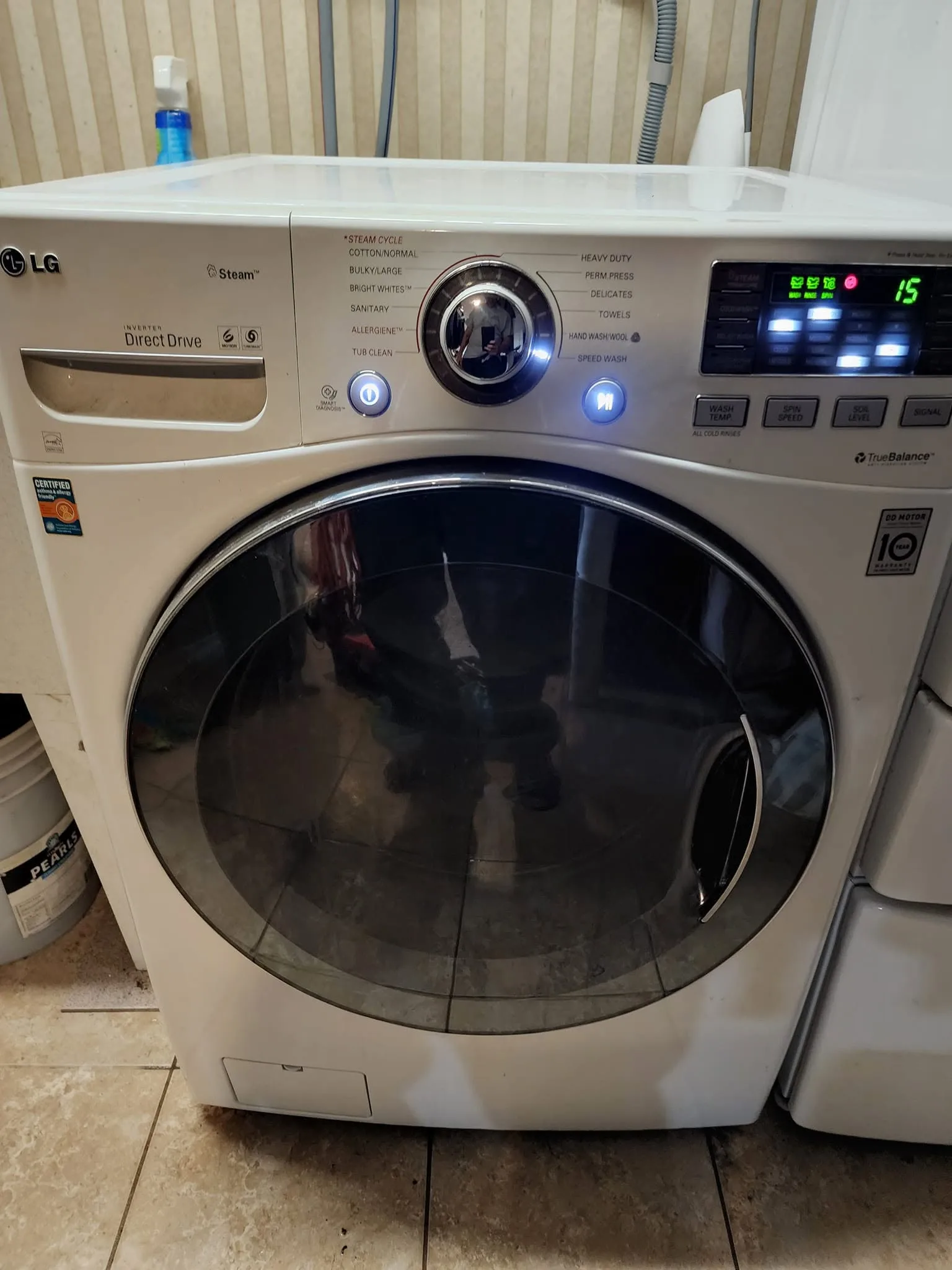
A dryer that tumbles without heat, needs two or three cycles, stops mid-cycle or begins making a new scraping sound needs more than a guessed part. Slow drying can come from the appliance, the exhaust path or both. Burning odor, smoke, excessive heat and gas odor require a safety decision before a repair decision.
For dryer repair Staten Island residents can request service from any borough ZIP code. Tell us whether the dryer is gas or electric, what the drum and heat are doing, whether airflow changed and which warning signs are present. Appointment availability, the diagnostic-fee policy and the accepted repair scope are confirmed before the visit.
lg-front-load-dryer-diagnostic

Gas & electric clothes dryer repair across Richmond County, NY

What should you do right now?

  • Stop cycle if you smell burning, see smoke/sparks, or cabinet is scorching hot.
  • Do not restart a dryer that repeatedly trips the electrical breaker or blows fuses.
  • If you smell gas: do not touch switches or phones inside; leave and call 911 or National Grid (718-643-4050).
  • Clean lint screen per manual; do not reach into internal ducting or open cabinet.
  • Keep clothing, boxes, and combustible cleaning supplies away from dryer perimeter.
  • Never use an extension cord with a major laundry appliance.
  • Do not pull connected units hard enough to strain gas lines or flexible exhaust ducts.

Dryer Repair Staten Island for No-Heat Problems

Gas and electric dryers generate heat through distinct mechanical and electrical pathways. Systematic testing isolates whether the issue is power supply, airflow, or internal components.

Electric Dryer Tumbles, No Heat

Drum turns on 120V motor even when 240V heating phase drops. Tests heating element coils, thermal cutoffs, high-limit thermostats, and terminal blocks.

Gas Dryer Tumbles, No Heat

Ignition sequence failure involves glow-bar igniters, radiant flame sensors, split dual gas-valve coils, or safety thermostats. (Gas odor requires emergency evacuation).

Heats Briefly Then Shuts Cold

Short cycling caused by restricted exhaust airflow tripping high-limit thermal switches, failing solenoid coil resistance when hot, or moisture sensor bypass.

Dryer Repair Staten Island for Long Drying Times & Airflow

When clothes take 2-3 cycles to dry, adding time hides dangerous lint accumulation. The Consumer Product Safety Commission (CPSC) warns that lint buildup restricts airflow and causes house fires.

Lint Screen & Residue

Clean lint screen every load. Fabric softener and dryer sheet residue forms invisible waxy films that choke airflow. Wash screen under warm water periodically.

Exterior Vent Hood Check

Observe outside exhaust damper while running. Weak airflow, stuck flappers, or birds’ nests choke exhaust and trap humid air inside the cabinet.

Appliance vs. Building Vent Scope

Dryer blower wheels and internal lint chutes are appliance service. Concealed wall/ceiling ductwork and exterior roof terminations are separate building vent scopes.

Replace plastic/foil accordion hoses with rigid metal ducting
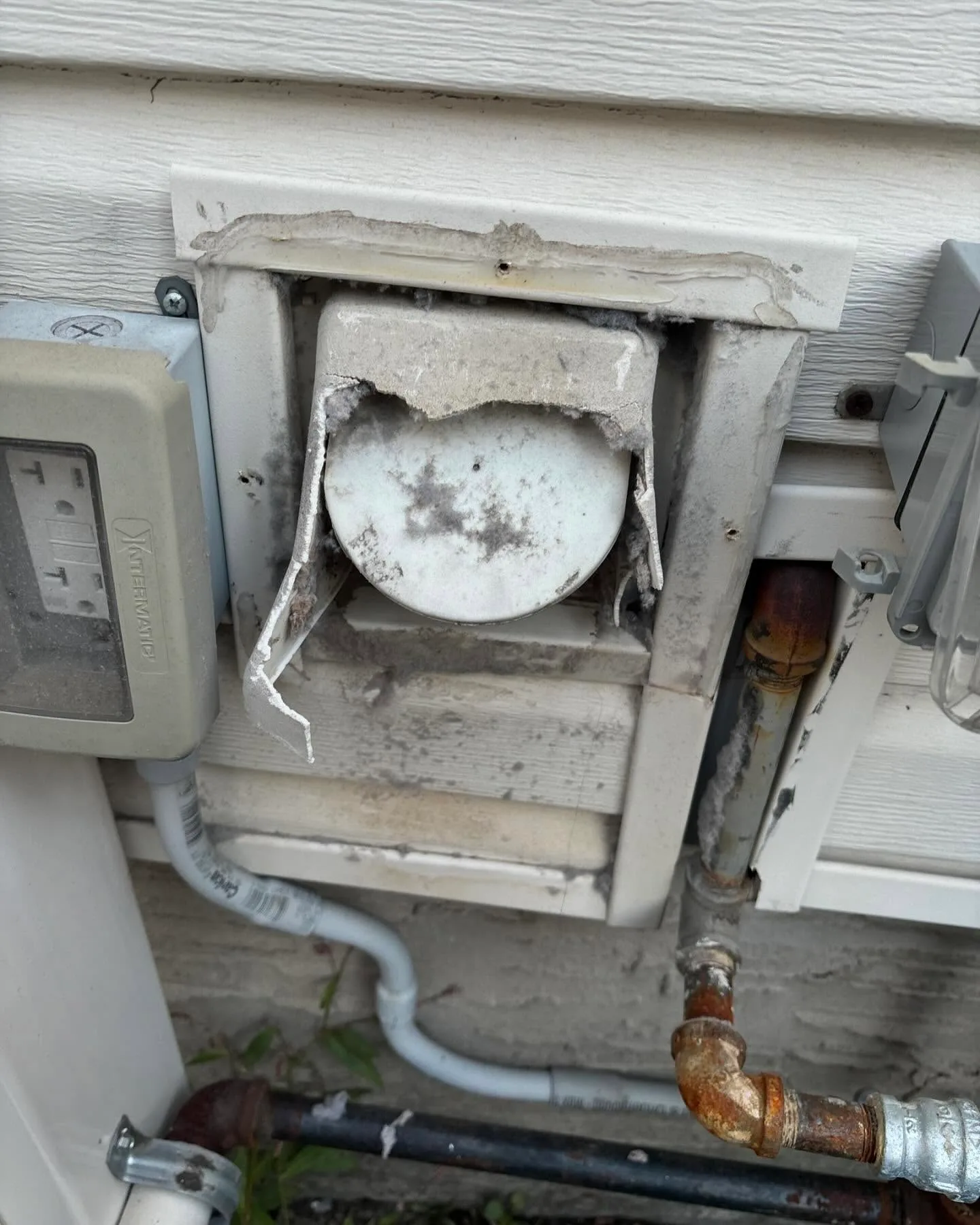
CPSC recommends replacing combustible foil or plastic accordion hoses with heavy-duty semi-rigid or rigid metal exhaust ducts. Never vent a dryer directly into interior living spaces.
exterior-dryer-vent-cleaning-staten-island

Dryer Will Not Start, Tumbling Failures and Mechanical Noise

Troubleshooting drive belts, idler pulleys, motor start windings, and thermal protection cutoffs.

Dryer Does Nothing at Start

Confirm door switch closes properly and breaker has not tripped. Blown thermal fuses, push-start switches, or control board relays prevent startup.

Runs Only While Button Is Held

Start circuit motor relay failure or motor centrifugal switch failure. Never tape or prop start buttons in active operating positions.

Stops Mid-Cycle Before Dry

Automatic moisture sensing vs timed dry faults. Overheating blower thermostats and motor thermal overloads shut down unit to prevent fires.

Drum Will Not Turn (Motor Runs)

Broken drive belt, snapped idler tensioner pulley spring, seized drum support roller, or worn front glide pads.

Squeaking, Chirping or Thumping

Worn rear drum support bearings, idler pulley shaft friction, or flattened rubber rollers producing rhythmic thumping.

Grinding, Scraping or Humming

Blower wheel rubbing internal lint shroud, worn drum felt seals allowing metal-on-metal drum contact, or seized motor bearings.

Overheating, Burning Odors and Lint Fire Prevention

Dryers create heat by design, but scorched clothing, burning electrical odors, or a cabinet hot to the touch indicate dangerous operating conditions:
  • Burning Odor: Stop immediately. Accumulated lint on heating elements or slipping drive belts produce pungent burning smells.
  • Hot Receptacle or Plug: Discolored, loose 240V outlets represent high-resistance electrical fire hazards. Disconnect power at breaker.
  • Gas Odor: Leave the home immediately without operating lights or phones. Call 911 or National Grid (718-643-4050).
  • Internal Chassis Lint: CPSC recommends periodic internal chassis cleaning by a qualified service technician.
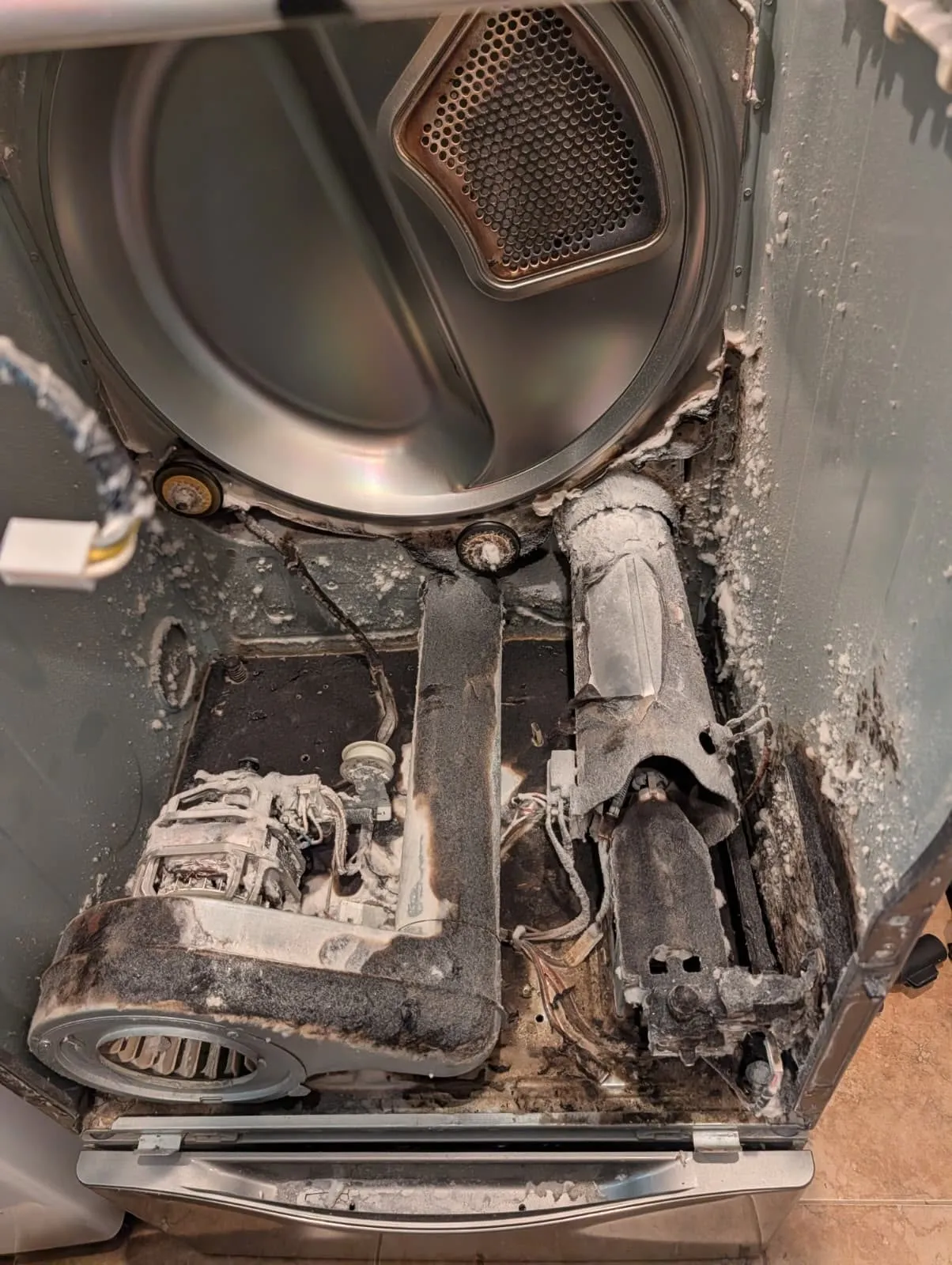
Severely lint-clogged dryer interior exposed for cleaning and repair.

Dryer Types and Brands Covered by Service Request

Fuel type, heating element architecture, and ventilation pathways differ across manufacturers; model numbers confirm exact specifications.

Supported Dryer Configurations

Vented electric dryers (240V), vented gas dryers (natural gas/propane), stacked laundry pairs (subject to access), laundry center dryer sections, and ventless heat-pump dryers.

Brands & Manufacturer Warranty

Servicing LG, Samsung, GE, Whirlpool, Maytag, Kenmore, Frigidaire, Bosch, Electrolux, Speed Queen, Miele. Provide full model number to confirm parts compatibility. Check active manufacturer warranties before booking.

How Dryer Repair Staten Island Diagnosis Works

A protective thermal fuse opens because of an underlying airflow or heating failure. We find the root cause, not just the blown part.
1

Describe heat, motion & vent

State whether drum tumbles, whether heat starts, cycle duration, and if the exterior vent hood opens.

2

Identify fuel type

Provide model number and state whether the dryer is gas or 240V electric. Do not pull unit to inspect gas line.

3

Confirm terms

Confirm appointment window, responsible provider, diagnostic fee policy, and cancellation terms before the visit.

4

Safe access setup

Clear laundry. Report stairs, tight closet installations, dryers stacked above washers, or roof vents.

5

Physical diagnostic

Testing thermal fuses, heating elements, gas coils, igniters, motor windings, and airflow resistance.

6

Written quote & test

Review itemized repair quote. Upon approval, technician completes repair and runs a verification test.

Dryer Repair Cost Factors

Cost depends on fuel type (gas vs electric), failure diagnosis, access, parts pricing, and labor. Ask before booking: What does the diagnostic fee cover? Does diagnosis include airflow observation? Does stacked installation add labor? What written warranty applies?

Should You Repair or Replace?

Dryers have simple mechanical assemblies; repairing thermal fuses, belts, igniters, or heating elements on sound drums is cost-effective. Replacement is warranted when motors, electronic controls, and drum structures fail simultaneously on an aging unit.

Dryer Repair Staten Island Service Areas & Local Conditions

Serving all Richmond County ZIP codes: 10301–10310, 10312, and 10314. Inspect exterior vent hoods for coastal wind damage, leaf blockages, or damaged damper flaps.

North Shore

St. George, Tompkinsville, Stapleton, Clifton, Rosebank, West Brighton, Port Richmond, Mariners Harbor.

Mid-Island

New Springville, Bulls Head, Willowbrook, Todt Hill, Emerson Hill, Dongan Hills, and surrounding areas.

East Shore

Arrochar, Grasmere, South Beach, Midland Beach, New Dorp, Oakwood, and coastal residential neighborhoods.

South Shore

Great Kills, Bay Terrace, Eltingville, Annadale, Huguenot, Prince’s Bay, Pleasant Plains, Tottenville.

Dryer Repair Staten Island FAQs

Direct answers regarding no-heat symptoms, exhaust vent clogs, gas safety, and fees.
Electric dryers tumble with an incomplete 240V supply or broken heating coil. Gas dryers tumble when igniters, flame sensors, or gas valve coils fail. Airflow blockages tripping thermal fuses are a frequent culprit.
Restricted exhaust vent airflow, clogged lint screen pores, heavy mixed loads, weak heating coils, or coated moisture sensors. Stop use if cabinet becomes abnormally hot or smells burned.
Warning signs include prolonged drying times, hot dryer cabinet tops, and little to no warm air escaping from the exterior wall hood while running. Clean transition ducts periodically.
Not automatically. Appliance repair handles internal blower housings and internal lint traps. Full-length concealed building exhaust runs and roof terminations are separate specialized vent cleaning scopes.
Household power breaker trip, failed door switch, broken thermal fuse, broken belt safety switch, or timer/control PCB failure. Avoid repeated breaker resets.
Snapped drive belt, broken idler pulley, seized drum roller bearing, foreign object jam, or motor start winding failure. Stop cycle if heat operates without tumbling.
Lint trapped against the heating element box, slipping rubber belt friction, or failing wiring terminal blocks. Stop immediately and call 911 if smoke or sparking appears.
Evacuate immediately without operating electrical switches or phones inside. From outdoors, call 911 or National Grid gas emergency at 718-643-4050.
Yes. We service both gas and 240V electric residential dryers. Technicians carry fuel-specific diagnostic equipment.
Yes, provided safe access clearance exists. Mention stacked laundry configurations during scheduling so proper staffing and tools are dispatched.
We service major residential brands out-of-warranty. Providing your complete model number enables verified parts access and technical documentation checks prior to dispatch.
No. Availability depends on dispatch schedule, location, fuel type, and parts. Call 718-559-5741 daily between 8:00 a.m. and 5:00 p.m. to check open windows.
Many repairs (thermal fuses, belts, rollers, elements, gas coils) are completed on-site if parts are stocked. Complex electronic controls or special-order parts may require a return visit.

Prepare for Dryer Repair Staten Island Service

Gather these essential details before calling or booking online to expedite diagnosis and parts staging:
  • Brand and complete model number from door frame or cabinet rim label.
  • Fuel type: 240V electric or natural gas (mention propane if documented).
  • Whether the drum turns, whether heat starts, and cycle run time.
  • Exterior vent hood airflow observations if safely accessible.
  • Safety flags: burning odor, smoke, gas smell, or repeated breaker trips.
  • Staten Island street address, ZIP code, basement stairs, or stacked closet clearance details.

Call 718-559-5741 daily from 8:00 a.m. to 5:00 p.m., or submit an online request.
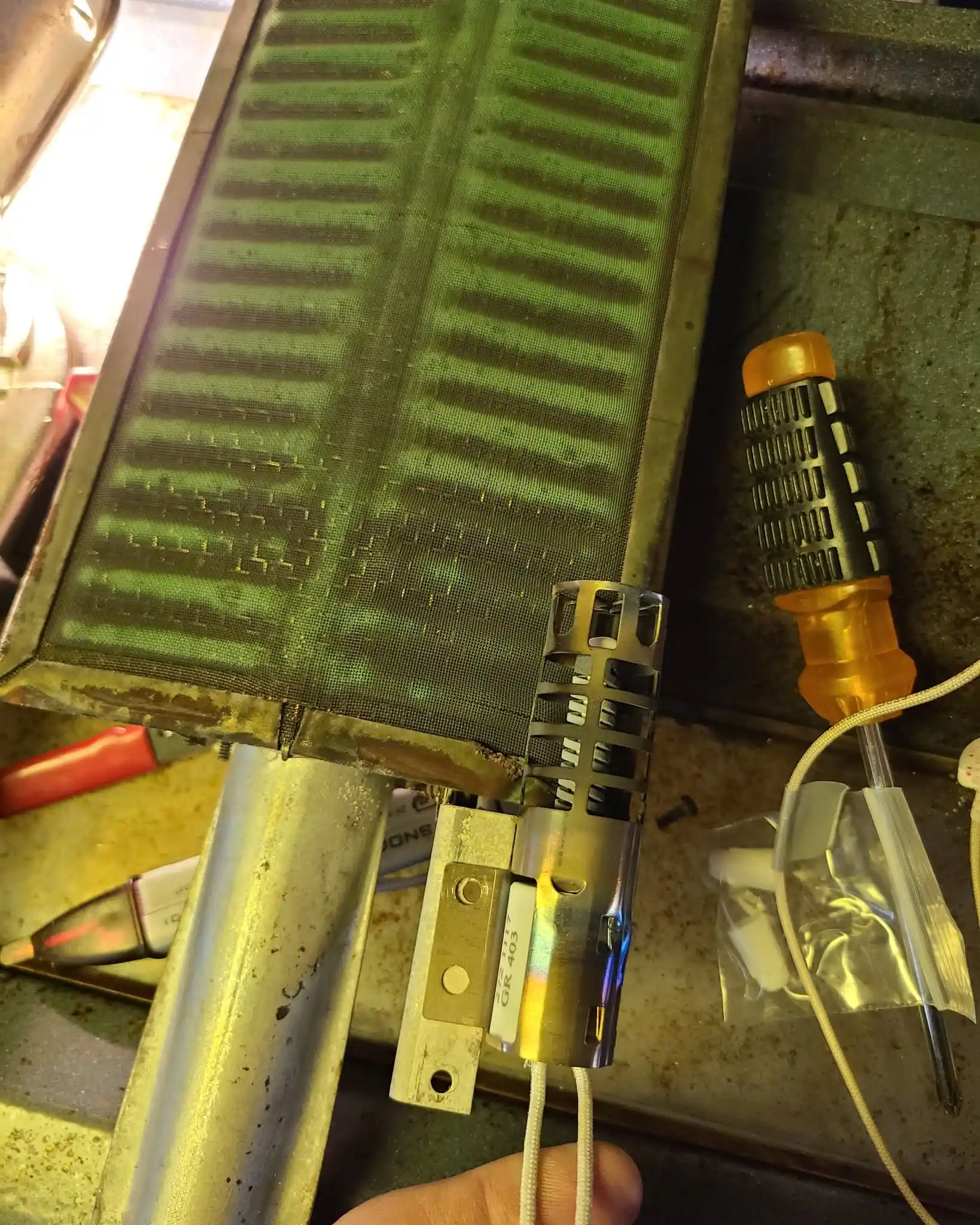
dryer-heating-element-removed-for-testing

Related Dryer Help & Knowledge Guides

Educational resources to help diagnose heating failures, inspect exhaust vents, and make sound repair decisions.

Dryer not heating: gas, electric & supply checks

Learn how to isolate 240V power loss, igniters, gas coils, and heating elements.

Dryer taking too long: appliance or exhaust path?

Separate internal blower wheel clogs from restricted exterior transition ducts.

Repair or replace an older dryer?

Compare repair quotes against new energy-efficient gas and electric replacement costs.

Diagnostic fees & written estimates

Understand on-site testing policies, labor rates, and fee crediting terms.

Explore all appliance repair services

Full navigation for refrigerators, washers, dishwashers, ovens, and stoves.
Scroll to Top