
Washer Not Draining? Stop the Cycle and Check Before Calling
A washer not draining leaves standing water in the drum, wet laundry that cannot be removed easily and the potential for overflow, odor and water damage. Before you pull the unit from the wall or try to force a second cycle, identify what the washer is actually doing. Is it completely stopped with water inside? Did it drain partially and then stop? Is it humming without moving water? Did it display an error code?
The difference matters because a drain filter clogged with a sock produces a different repair path than a failed drain pump, a kinked hose, a blocked standpipe, a lid-switch fault or a control-board problem. Good information helps a technician prepare and may prevent an unnecessary visit if the fix turns out to be accessible.
For help arranging washer diagnosis in Staten Island, tell us the brand, model number, front-load or top-load, the error code if one appeared and whether water is still inside. Appointment availability, the business handling the visit, diagnostic terms and repair scope should be confirmed before the appointment.
Request Washer Service
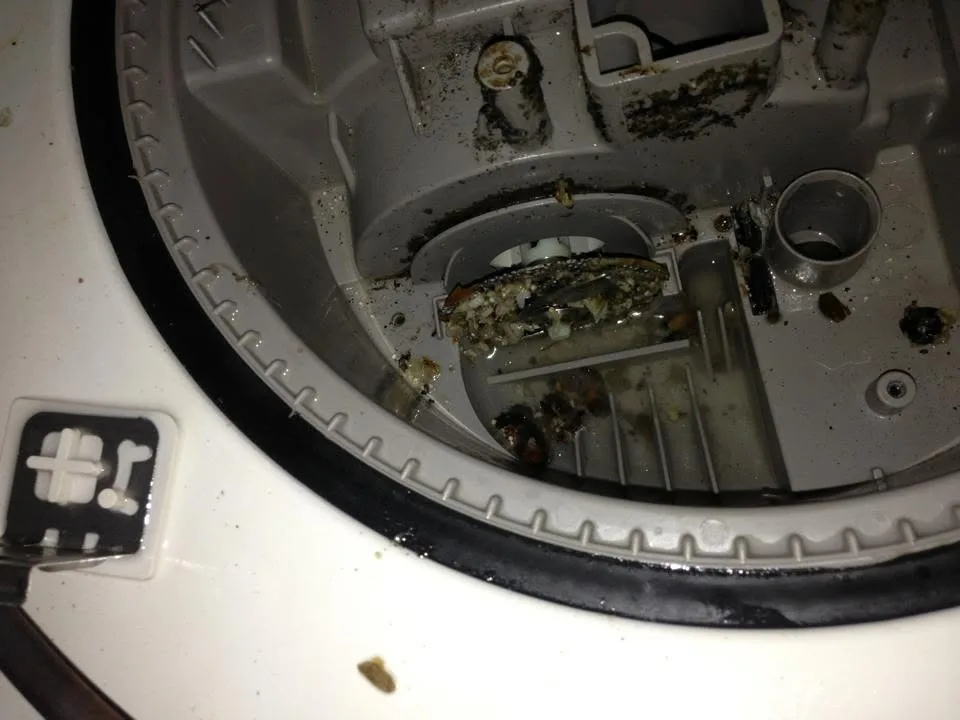
What Should You Do When the Washer Will Not Drain?
Use this order. It prevents overflow, protects floors and preserves diagnostic evidence.
- Cancel or stop the cycle. Press the pause or cancel button. If the washer does not respond, wait two minutes and try again. Some models lock the door until the cycle fully ends or the water level drops.
- Do not open the door on a front-load washer with water inside. The water level may be above the door seal. Opening the door can release several gallons onto the floor. Wait until the water has been drained or lowered before attempting to open.
- Check for an error code. Record any letters, numbers or flashing lights on the display or control panel. Photograph the code before clearing it. Error codes are model-specific; the same code on different brands can mean different things.
- Listen for the drain pump. When the washer is supposed to drain, listen for a humming or buzzing sound from the pump area, usually at the bottom front or bottom rear. A pump that hums but does not move water may be jammed. A pump that makes no sound may have failed or may not be receiving power.
- Check the drain hose at the wall. Without pulling the washer out, look at the drain hose where it enters the standpipe, laundry sink or wall connection. Make sure the hose is not kinked, crushed or pushed too far down into the standpipe. A hose inserted more than about eight inches can create a siphon problem.
- Protect the floor. Place towels around the base. If you have a floor drain nearby, make sure it is clear. If water is actively leaking, contain it before investigating further.
- Do not repeatedly restart the cycle. Running the cycle again can force more water into a washer that is already full, worsen a pump jam or create a floor flood.
Stop and change course if there is water near the power cord, outlet or any electrical connection; if you smell gas from a nearby dryer or water heater; or if the breaker has tripped repeatedly. Do not reach into standing water near an energized appliance.
Washer Not Draining: Match the Pattern to the Likely System
The way the washer fails to drain narrows the diagnostic path. These observations help, but none confirms a failed part without testing.
| What you observe | Safe information to collect | Systems that may need evaluation |
|---|---|---|
| Washer completely stopped with water inside | Error code, cycle stage when it stopped, any sounds, lid/door lock status | Drain pump, control board, lid/door switch, wiring, power supply |
| Washer drained partway then stopped | How much water remains, pump sounds, hose condition at wall | Partial clog, pump obstruction, hose restriction, standpipe |
| Pump hums or buzzes but water does not leave | Vibration at pump, recent items washed, small-item history | Foreign object in pump, broken impeller, seized pump motor |
| Washer drains but very slowly | Hose elevation, standpipe height, drain-line backup, previous plumbing | Partial hose clog, standpipe restriction, household drain issue |
| Water drains from washer but backs up onto floor | Where water appears, standpipe overflow, sink backup | Standpipe capacity, household drain blockage, improper hose height |
| Washer fills and immediately drains | Whether siphoning occurs, hose position, drain connection height | Hose inserted too deep, missing air gap, improper installation |
| Error code displayed, cycle locked | Exact code letters/numbers, cycle stage, door/lid lock status | Model-specific fault, sensor, lock, pump circuit, control |
Why does the drain pump hum but not drain?
A drain pump that makes a humming or buzzing sound but does not move water is often obstructed. Common culprits include a coin, button, hairpin, small sock, underwire from a bra, plastic fragment or fabric scrap that has lodged against the impeller. On many front-load washers, the debris filter is accessible through a small panel at the bottom front. On many top-load washers, the pump may not have a user-accessible filter. Consult the owner manual before attempting access.
What if the washer drains but water comes back out the standpipe?
This is often a household plumbing problem rather than an appliance problem. The standpipe or drain line may be partially blocked, undersized or shared with another fixture. Standpipe overflow during the washer’s high-volume drain cycle can look like a washer malfunction but may require a plumber rather than an appliance technician. Note whether the same backup happens at a nearby sink or floor drain.
What if the washer fills and immediately drains?
This is usually a siphon condition rather than a pump or control problem. If the drain hose is pushed too far into the standpipe and there is no proper air gap, water siphons out as fast as it enters. The fix is a hose-height adjustment, not a new pump. Check the installation guide for the correct hose insertion depth and height.
The Drain-Filter Check: When You Can Do It Safely
Many front-load washing machines have a debris filter—also called a pump filter, drain filter or coin trap—at the lower front of the unit. Clearing this filter is the single most common owner-level fix for a washer not draining.
Before you open the filter
- Prepare for water. Place towels and a shallow pan or baking sheet under the filter door. The filter compartment holds water, often a significant amount if the washer did not finish draining. On some models, a small drain tube next to the filter lets you release water slowly.
- Turn off the washer. Do not open the filter while the pump is running.
- Read the owner manual. The filter location, removal procedure and direction of turn vary. Forcing the wrong direction or pulling without unscrewing can crack the housing.
Cleaning the filter
Open the filter cover or unscrew the filter cap slowly. Let water flow into the pan. Remove the filter and clear coins, buttons, lint, fabric scraps, hair ties, pet hair clumps and any other debris. Inspect the filter housing for cracks, a missing seal or damage. Reinstall by hand—do not use tools or over-tighten.
After reinstalling
Run a short drain or spin cycle to confirm the washer drains. If it still does not drain, the obstruction may be deeper in the pump, hose or drain path and professional diagnosis is needed.
Top-load washers without an accessible filter
Many top-load models do not have a user-accessible debris filter. Debris can still reach the pump. If the pump hums and the washer will not drain, service is typically needed to access the pump from underneath or inside the cabinet.
What If the Washer Problem Is Actually the Drain Plumbing?
The washer may be working correctly, but the water has nowhere to go. Distinguishing an appliance problem from a plumbing problem saves time and the cost of the wrong service call.
Signs that the drain plumbing may be the issue
- Water backs up out of the standpipe or onto the floor during the drain cycle but does not overflow when the washer is off.
- A nearby sink or floor drain is also slow or backing up.
- The standpipe makes gurgling sounds during the washer drain.
- The washer drained normally until a recent plumbing event, construction or root intrusion.
- Moving the drain hose to a laundry sink or bucket allows the washer to drain successfully.
If the household drain is the problem, a plumber or drain-clearing service may be needed. An appliance technician diagnoses the washer; they do not typically clear household drain lines.
Signs that the washer itself is the issue
- The drain pump does not make any sound, or hums without draining.
- An error code related to the pump, drain or motor appears.
- Clearing the debris filter resolved the problem temporarily but it has returned.
- The washer will not advance past the drain portion of the cycle.
- The lid switch, door lock or control prevents the cycle from progressing.
What Usually Requires Professional Diagnosis?
If the filter is clear, the hose is not kinked, the standpipe is not backing up and the washer still will not drain, the following systems typically require on-site testing.
Drain pump
The drain pump moves water from the tub to the drain hose. A failed pump motor, cracked impeller, electrical fault or internal blockage beyond the filter can prevent draining. Some washers use a single pump for both drain and recirculation; others have separate pumps. The pump design and location are model-specific.
Lid switch and door lock
On top-load washers, the lid switch may prevent the washer from entering the drain or spin cycle when it senses the lid is open or the switch has failed. On front-load washers, the door lock assembly serves a similar function. A faulty switch or lock can stop the cycle before draining begins, even though the pump and drain path are fine.
Control board and wiring
The electronic control board tells the pump when to run, how long to drain and when to advance the cycle. A failed board, loose wiring harness, corroded connector or power interruption can prevent the drain command from reaching the pump. Intermittent failures are particularly difficult to diagnose remotely.
Motor, belt and drive system
On some washer designs, the motor drives both the agitator or wash plate and the drain function. A failed motor coupling, broken belt, worn clutch or drive problem can prevent the washer from reaching the drain and spin portion of the cycle. These components are inside the cabinet.
Pressure switch and water-level sensor
The pressure switch tells the control board how much water is in the tub. If it sends an incorrect signal, the washer may not initiate drainage, may drain partially or may overfill. The switch connects to a small tube that can become clogged or disconnected.
Staten Island Conditions That Matter
Apartment laundry and shared standpipes
Many Staten Island apartments, co-ops and condos have washer connections in small laundry closets, kitchens or bathrooms. Shared standpipes or undersized drain connections are more common in older multi-unit buildings. A standpipe that handles one washer drain cycle may overflow with a high-efficiency model’s faster pump. If the standpipe has never backed up before and the washer is new or recently replaced, the installation and drain connection should be checked.
Basement laundry and flooding
Washers installed in basements near floor drains can be affected by heavy rain, backed-up storm drains or sewer surcharge. If the floor drain near the washer is backing up, the problem may be the municipal system, not the appliance. Do not operate a washer in a flooded or actively flooding basement. Water near the electrical connection is a shock hazard.
Landlord, tenant and building rules
If the landlord installed the washer or provided the hookup, notify the landlord or property manager in writing before authorizing repair. New York guidance says landlord-installed appliances in multiple dwellings must be maintained in good and safe working order. If you own the washer but share building plumbing, a plumbing problem may be a building-management matter.
Winter drain-line freezing
Washer drain hoses routed through unheated spaces, against exterior walls or through uninsulated areas can freeze in winter. A frozen drain hose mimics a clogged drain. Do not apply open flame to thaw a frozen hose. If you suspect the hose is frozen, wait for it to thaw naturally in a heated space or contact a service professional.
What to Record Before Requesting Service
- Full brand and model number from the appliance label.
- Front-load or top-load configuration.
- The error code, photographed before clearing.
- At what point in the cycle the washer stopped.
- Whether the drain pump makes any sound.
- Whether you cleaned the debris filter and what was found.
- Whether the drain hose or standpipe shows signs of backup.
- Whether a nearby sink or floor drain is also slow.
- When the problem started and whether it is intermittent.
- Recent installation, move, plumbing work, or new washer.
- Warranty, service-contract or recall status.
- Access limits, ownership and building requirements.
Search the exact model at the CPSC recall database and the manufacturer’s support site.
When Should You Stop Checking and Request Diagnosis?
A washer not draining after clearing the filter, checking the hose and confirming the standpipe is clear needs professional diagnosis. Request service promptly when:
- The drain pump makes no sound or hums continuously without draining.
- An error code persists after filter cleaning and restart.
- Water remains in the drum and the door lock will not release.
- The washer has overflowed or leaked onto the floor.
- The problem returns after each filter cleaning.
- There is water near the power cord, outlet or electrical connections.
- The washer was exposed to flooding or a significant water event.
When arranging service, ask:
- Who will handle the appointment and diagnosis?
- What does the diagnostic or service-call fee cover?
- Is the written option itemized for parts, labor, tax and other charges?
- Will the technician evaluate the standpipe and hose connection or only the washer?
- Is a return visit expected if a model-specific part is required?
- What repair and warranty terms will be provided in writing?
Request Drain Diagnosis
Repair or Replace a Washer That Will Not Drain?
The answer depends on the failed component, not the symptom. Replacing a clogged filter or a jammed pump is a different financial decision from replacing a control board, motor or tub bearing. First obtain a written diagnosis and compare the complete repair cost with a suitable installed replacement.
Consider the quoted repair cost, part availability, appliance age and condition, repeat-failure history, replacement cost including delivery, haul-away, hookup and whether the replacement fits the existing connections and space.
Compare both paths → /resources/repair-or-replace-appliance/ Understand quote components → /resources/appliance-repair-cost-staten-island/
Get Help With a Washer Not Draining in Staten Island
If you have cleared the filter, checked the hose and ruled out a plumbing backup, request a model-aware diagnosis. Describe the error code, what the pump does, where water appears and whether the problem is new or recurring. Confirm appointment availability, diagnostic terms, provider scope and written authorization before work begins.
Phone hours: 8:00 a.m. to 5:00 p.m. daily.
Washer service overview → /services/washer-repair/ How the visit works → /how-it-works/ Service-area review → /service-areas/