Power Outage and Food Safety: How Long Is Refrigerator and Freezer Food Safe?
When the power goes out, your refrigerator and freezer stop cooling. The food inside them begins to warm. How long the food stays safe depends on how long the power is out, whether the doors stay closed, how full the appliance is, the starting internal temperature and the type of food stored.
This is a food-safety question first and an appliance question second. The USDA (U.S. Department of Agriculture) and the FDA (U.S. Food and Drug Administration) provide clear guidance on how long food stays safe without power and what to do when the power returns. This guide follows their recommendations.
Staten Island experiences power outages from severe weather, grid stress during summer heat waves, utility infrastructure issues and storms. Nor’easters, tropical weather systems and summer thunderstorms can cause outages lasting from a few hours to several days. Knowing these guidelines before an outage occurs helps you make safe food decisions when the power comes back.
The Key Numbers: USDA Food Safety Guidelines
Refrigerator
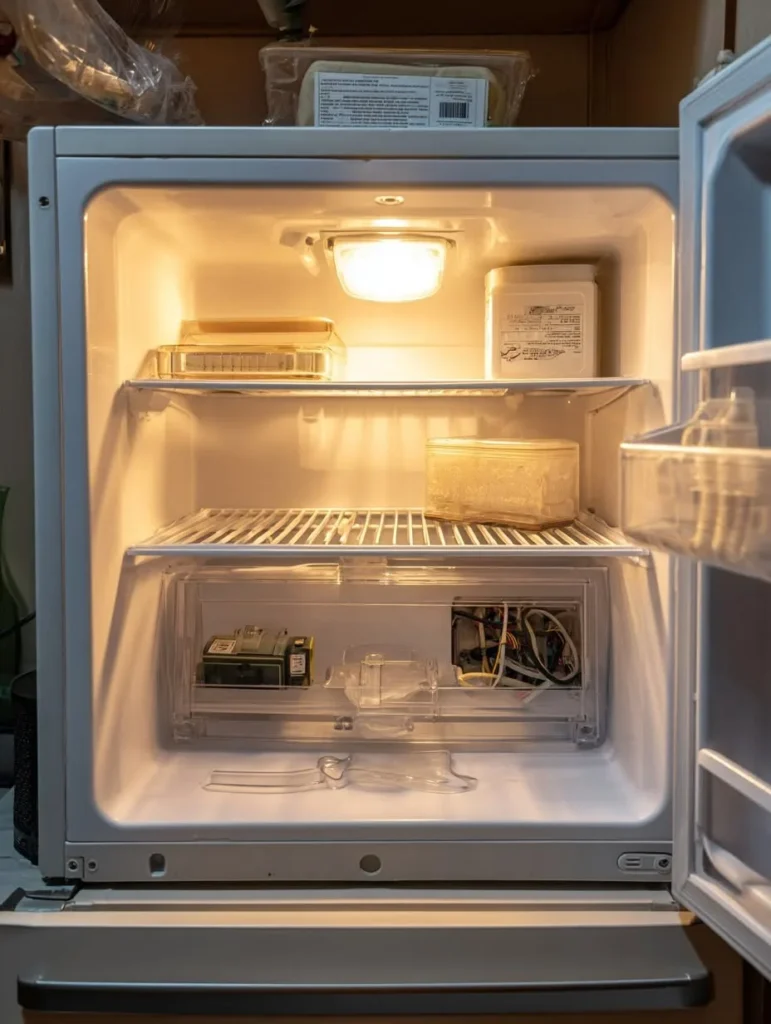
A refrigerator will keep food cold enough to be safe for approximately 4 hours after the power goes out, if the doors stay closed. After 4 hours without power, perishable food in the refrigerator should be evaluated using the guidelines below.
Freezer
A freezer keeps food safe significantly longer than a refrigerator:
- A full freezer holds its temperature for approximately 48 hours after the power goes out, if the door stays closed.
- A half-full freezer holds its temperature for approximately 24 hours after the power goes out, if the door stays closed.
Food that still contains ice crystals or is at 40°F or below when the power returns can be safely refrozen. Food that has thawed and been above 40°F for more than 2 hours should be evaluated by category.
The 40°F rule
The USDA uses 40°F as the critical threshold. Perishable food that has been above 40°F for more than 2 hours enters the “danger zone” where bacteria can multiply rapidly. Food in this category should be discarded, not tasted, smelled or judged by appearance.
You cannot tell by smelling, tasting or looking at food whether it is safe. Bacteria that cause foodborne illness do not always change the food’s appearance, smell or taste. When in doubt, throw it out.
What to Do During the Power Outage
Keep the doors closed
Every time you open the refrigerator or freezer door, warm air enters and the internal temperature rises. Resist the urge to check the food. Plan ahead by knowing what is inside and retrieving everything you need in a single, brief opening.
Monitor the time
Note when the power went out. If you are not home when it happens, check with neighbors, the utility company or a smart-home device to determine the approximate outage start time.
Use a thermometer
An appliance thermometer placed inside the refrigerator and freezer before the outage provides the most reliable information. When the power returns, check the thermometer immediately:
- Refrigerator at or below 40°F: Food is safe. The power came back before the critical threshold was reached.
- Refrigerator above 40°F: Evaluate each food item individually using the category guidelines below.
- Freezer at or below 0°F: Food is safe and still frozen.
- Freezer above 0°F but food still contains ice crystals: Food can be safely refrozen, though texture may be affected.
- Freezer food fully thawed and above 40°F for more than 2 hours: Evaluate and discard as needed.
If you do not have a thermometer, use the timelines above as conservative guidelines.
Use ice and coolers
If the outage is expected to last more than 4 hours, transfer perishable items to coolers with ice or frozen gel packs. A well-insulated cooler with sufficient ice can maintain safe temperatures for 24 to 48 hours depending on the ambient temperature and how often it is opened.
Group items by type: dairy together, meat together, prepared food together. This makes evaluation easier when the power returns.
Do not put food outside in winter
Even in cold weather, outdoor temperatures fluctuate and food can be exposed to direct sunlight, animals and contaminants. The temperature outside is not reliably cold enough to keep food safe. Use a cooler with ice instead.
What to Evaluate When the Power Returns
When the power comes back on, open the refrigerator and freezer and check the temperature and condition of perishable items.
Foods to discard if above 40°F for more than 2 hours
The USDA provides a detailed food category chart. The following categories are summarized here:
Discard these if above 40°F for more than 2 hours:
- Raw or cooked meat, poultry and seafood.
- Deli meats, hot dogs and lunch meat.
- Casseroles, soups, stews and leftover cooked food.
- Milk, cream, soft cheeses and yogurt.
- Opened baby formula and baby food.
- Egg-based items: custard, pudding, egg salad, quiche.
- Cut fresh fruits and cut vegetables.
- Cooked pasta, cooked rice and cooked potatoes.
- Opened cream-based salad dressings and sauces.
- Fresh pasta, cookie dough and other refrigerated doughs.
- Opened mayonnaise-based salads (potato salad, tuna salad, egg salad).
These foods are generally safe even if above 40°F for more than 2 hours:
- Hard cheeses (cheddar, Swiss, Parmesan).
- Butter and margarine.
- Whole fresh fruits and whole fresh vegetables (uncut).
- Condiments: ketchup, mustard, relish, pickles, olives, soy sauce, vinegar-based dressings.
- Opened fruit juices.
- Jams, jellies and peanut butter.
- Bread, rolls, cakes, muffins and bagels.
This list is not exhaustive. For the complete USDA food safety chart, visit FoodSafety.gov.
Evaluating frozen food
Frozen food that is fully thawed follows the same rules as refrigerator food. If it has been above 40°F for more than 2 hours, discard perishable items. If it still contains ice crystals or the freezer thermometer reads 40°F or below, the food can be safely refrozen.
Refrozen food is safe but may lose quality. Texture, color and flavor may change, especially for meats, seafood, fruits and baked goods. This is a quality issue, not a safety issue.
What to Check on the Refrigerator and Freezer After the Power Returns
Once you have addressed food safety, evaluate whether the appliance itself is functioning properly.
Does the refrigerator start running?
When the power returns, the compressor should restart within a few minutes. If the refrigerator is plugged in, the power is on and the compressor does not start:
- Check the circuit breaker. A power surge during the outage or restoration can trip the breaker.
- Check the outlet. Plug in a lamp or phone charger to confirm the outlet has power.
- Check the temperature setting. Some models reset to “off” after a power interruption.
- Listen for sounds. A click followed by a hum is normal. A click with no hum, or repeated clicking, may indicate a compressor start issue.
If the refrigerator does not start within 30 minutes of power restoration, it may need service.
Is the refrigerator cooling but not reaching temperature?
After a long outage, a refrigerator full of warm food takes time to cool down. Allow 4 to 6 hours for the refrigerator to return to normal temperature and 24 hours for the freezer. If the temperatures have not stabilized after this period, there may be a problem.
See: Cooling problems → /resources/refrigerator-not-cooling/
Check for power-surge damage
Power surges during an outage or when power is restored can damage electronic control boards, compressor start components, display panels and other electronics. If the refrigerator displays an error code, behaves erratically or shows signs of electrical damage (burned smell, flickering display, tripped breaker), do not continue using it until it has been evaluated.
Check the gaskets and seals
If the doors were opened during the outage, verify that the gaskets sealed properly when closed. A door that does not close fully or a gasket that is folded, dislodged or has food debris on it can prevent the refrigerator from reaching its target temperature.
Documenting Food Loss for Insurance or Assistance
After a significant power outage—especially one caused by a named storm, natural disaster or extended utility failure—you may be able to recover some of the cost of discarded food through homeowner’s or renter’s insurance, or through government disaster assistance if a federal or state declaration is issued.
What to document
- Photograph the discarded food before throwing it away. Take photos of the food in the refrigerator and freezer, showing the items and their condition.
- Create a list. Record each item, the approximate purchase price, the quantity and whether it was discarded or kept. Be as specific as possible.
- Record the outage duration. Note when the power went out and when it was restored. Utility records, text alerts and outage maps can support this.
- Record the temperature. If you have an appliance thermometer with min/max memory, photograph the reading showing the highest temperature reached during the outage.
- Save receipts. If you have recent grocery receipts, keep them as supporting documentation.
Insurance claims
Most homeowner’s and renter’s insurance policies include a provision for food spoilage due to power outage, typically with a sublimit (for example, $500 or $1,000). Check your policy for the specific terms, the deductible and whether a utility-caused outage is covered differently from a storm-caused outage.
Contact your insurer promptly after a significant food loss. File the claim with the photographs, the item list, the outage documentation and any receipts.
Disaster assistance
If a federal disaster declaration is issued for your area (as has happened with major storms affecting Staten Island), FEMA disaster assistance may include provisions for food loss. State and city assistance programs may also apply. Check DisasterAssistance.gov and NYC Emergency Management for current information.
Making Safe Decisions: The Category-by-Category Approach
When evaluating food after an outage, resist the temptation to make blanket decisions. Different foods have different risk profiles. The USDA categorizes foods by type to help you evaluate each item:
High-risk foods (discard if above 40°F for more than 2 hours)
These foods support rapid bacterial growth and present the highest risk of foodborne illness:
- Raw and cooked meat and poultry. Beef, pork, lamb, chicken, turkey, ground meat, deli slices, hot dogs. No exceptions.
- Raw and cooked seafood. Fish, shrimp, crab, lobster, scallops, cooked seafood dishes.
- Dairy. Milk, cream, soft cheeses (brie, cottage cheese, cream cheese, ricotta), yogurt, sour cream.
- Eggs and egg-based dishes. Raw eggs (if not in the shell in the US), hard-boiled eggs, custards, puddings, egg salad, quiche.
- Cooked foods. Casseroles, soups, stews, pasta dishes, rice dishes, cooked vegetables in sauce, pizza, leftovers.
- Prepared salads. Potato salad, tuna salad, chicken salad, egg salad, pasta salad with mayo-based dressing.
- Open containers. Opened baby food and formula, opened cream-based sauces and dressings, opened gravy.
- Cut produce. Cut fruits, cut vegetables, fresh salad greens, cooked beans.
Lower-risk foods (often safe even above 40°F for more than 2 hours)
These foods resist bacterial growth or are preserved by their composition:
- Hard cheeses. Cheddar, Swiss, Parmesan, Colby, provolone. The low moisture and high salt content inhibit bacterial growth.
- Processed cheese. Processed cheese slices and spreads.
- Butter and margarine. The high fat content is resistant to bacterial growth for moderate periods.
- Whole fresh fruits. Apples, oranges, bananas, avocados. These have protective skins. Do not apply to cut fruit.
- Whole fresh vegetables. Carrots, peppers, tomatoes, mushrooms, herbs. These have lower risk than cut produce. Do not apply to cooked or cut vegetables.
- Condiments. Ketchup, mustard, relish, pickles, olives, Worcestershire sauce, soy sauce, steak sauce, vinegar-based dressings. These are typically acidic or high in salt.
- Bread products. Bread, rolls, cakes, muffins, bagels, tortillas, pancakes, waffles (without cream fillings).
- Fruit juices. Opened pasteurized fruit juices.
- Jams, jellies and honey. High sugar content resists bacterial growth.
- Peanut butter. Low moisture, high fat.
The complete USDA chart
The full USDA food safety chart for power outages is available at FoodSafety.gov. Bookmark or print this chart before storm season.
Extended Outages: 24 Hours and Beyond
When an outage lasts more than 24 hours, the food-safety window closes for most perishable refrigerator items. At this point:
- All perishable food in the refrigerator should be discarded unless it was transferred to a cooler with ice within the first 4 hours.
- Freezer food should be evaluated: if the freezer was full and sealed, food may still be safe at the 24-hour mark. At 48 hours, even a full freezer will have begun thawing.
- Consider purchasing dry ice for the freezer if available. Dry ice can extend the safe window significantly. Handle dry ice with gloves, do not touch it directly and ensure adequate ventilation.
Community resources during extended outages
During major outage events, New York City Emergency Management and local organizations often establish cooling centers, food distribution points and charging stations. The NYC 311 service provides current information on resources during emergencies.
Preparing for Power Outages Before They Happen
Keep appliance thermometers in the refrigerator and freezer
An appliance thermometer that stays inside the compartment provides a reading as soon as you open the door after the outage. Digital models with min/max memory record the highest temperature reached during the outage, even if the temperature has come down by the time you check.
Keep the freezer full
A full freezer stays cold longer than a half-empty one because the frozen mass acts as a thermal battery. If your freezer is not full, fill empty space with containers of water frozen in advance. These ice blocks help maintain temperature during an outage and provide emergency drinking water afterward.
Freeze gel packs and keep coolers accessible
Frozen gel packs can be transferred to a cooler quickly if the outage is expected to be long. Keep an insulated cooler, bags of ice or a source of ice accessible.
Know your utility's outage information
- Con Edison outage map and reporting: coned.com/en/outages
- PSEG Long Island (if applicable to your area): check their outage map.
- Sign up for outage alerts from your utility to receive text or email notifications.
Maintain a surge protector
A quality surge protector on the refrigerator power outlet can protect electronic components from power-surge damage during restoration. Note that some manufacturers do not recommend connecting refrigerators to surge protectors or GFCI outlets, so check the owner manual.
Staten Island Power Outage Context
Storm and weather patterns
Staten Island is vulnerable to power outages from nor’easters, tropical storms, summer thunderstorms, ice storms, and high-wind events. Hurricane Sandy (2012) and subsequent severe weather events demonstrated that outages can last days in some areas. South Shore, East Shore and low-lying coastal areas are particularly susceptible to storm-related outages.
Summer heat-wave outages
During extreme heat events, grid demand can exceed capacity, causing rolling brownouts or full outages. These events typically occur during the hottest afternoon hours when air conditioning load is highest. A refrigerator that is already working hard to cool in a warm kitchen faces additional stress during a heat-related outage.
Building-wide outages
In apartment buildings and multi-unit structures, a single breaker, transformer or building-electrical issue can knock out power to all units. Building management and the utility may need to coordinate to restore power. Know your building’s emergency contact and electrical setup.
Generator use
Some Staten Island homeowners have portable or standby generators. If using a generator to power the refrigerator during an extended outage:
- Follow all generator safety rules. Never run a generator indoors, in a garage, in a basement or near windows. Carbon monoxide from generators is lethal.
- Use a properly rated extension cord or transfer switch.
- Prioritize the refrigerator and freezer for generator power during food-safety-critical hours.
- Do not connect the generator directly to the household electrical panel without a transfer switch.
When to Request Refrigerator Service After a Power Outage
If the power is back on and the refrigerator is not cooling, not starting, displaying error codes, making unusual noises or showing signs of surge damage, request service.
When contacting us, describe:
- How long the power was out.
- Whether the refrigerator started running when power returned.
- Current temperature readings if available.
- Any error codes, unusual sounds or visible damage.
- Whether a power surge occurred during restoration.
- Full brand and model number.
Phone hours: 8:00 a.m. to 5:00 p.m. daily.
Refrigerator not cooling? → /resources/refrigerator-not-cooling/ How the visit works → /how-it-works/